Why We Shifted From Volume to Depth — And What Happened Next
The martech company with 200 target accounts globally had made the classic mistake: generic sequences, high volume, market burned in four weeks.
When I rebuilt their outbound, I made one structural decision that changed everything: we would treat every account as if it were the only account.
Five accounts per week. Deep research on each. Multi-touch across email and LinkedIn. Personalisation at all three levels — demographic, contextual, and experiential. A sequence built around their specific situation rather than their industry or company size.
The result: first deal closed in 12 weeks. Not because 12 weeks is fast in B2B sales — it is not. But because the previous six weeks of generic outbound had produced zero conversations. Zero. With 12 weeks of ABM, we had produced one closed deal and three active conversations.
The same market, previously burned, was now responding. Because the outreach felt different enough from what they had seen before that they were willing to engage.
This is what account-based outbound actually does: it changes the quality of engagement rather than just the quantity of contacts.
What Account-Based Outbound Actually Is
Account-based outbound is not a tool. It is not a software category. It is a philosophy about where to concentrate effort in the sales process.
Traditional Scaled Outbound
Large pool of ICP-fit contacts
Standardised sequence for all
Volume of conversations at top of funnel
Close a percentage of volume
Lower effort per account
Works best with TAM 2,000+
Account-Based Outbound
Small number of highest-value accounts
Deeply personalised per account
Fewer but higher-quality conversations
Higher conversion from conversation to close
Significant research per account
Works best with TAM under 500
The bet is that the quality of ABM conversations — and the conversion rate from conversation to closed deal — justifies the concentrated effort. For most early-stage B2B startups with small TAMs, the bet pays off.
When to Use ABM vs Scaled Outbound
| Signal |
Use ABM |
Use Scaled Outbound |
| TAM size |
Under 500 accounts |
Above 2,000 accounts |
| ACV |
Above ₹10 lakhs annually |
Below ₹5 lakhs annually |
| Sales cycle |
Complex — multiple stakeholders, long evaluation |
Short — transactional B2B purchases |
| Market situation |
Burned market — prospects have seen generic outreach |
Fresh market — prospects haven't been contacted |
| Primary goal |
High-quality pipeline with strategic accounts |
High-volume pipeline with broad ICP |
The ABM Execution Framework
Five components. Each one is necessary. Missing any one of them degrades the whole.
01
Account Selection
Choose accounts based on fit score, not just ICP match. Consider revenue potential, strategic value, likelihood of conversion based on triggers, and relationship warmth. Start with accounts where you have any warm signal — a mutual connection, a relevant recent event, a specific pain trigger you can identify. Every account in your ABM list should have a reason it is there beyond "they match the demographic profile."
02
Account Research
For each account, understand: their current situation in your relevant area, recent news or changes that affect their needs, the specific person who owns the problem you solve, the person who controls the budget, and any relationships or touchpoints that could be leveraged. This research takes 30 to 60 minutes per account. It is not optional. It is the foundation of everything that follows.
03
Multi-Touch Sequence Design
ABM sequences should include at least three channels over four to six weeks: email, LinkedIn, and where appropriate, phone or direct mail for very high-value accounts. Each touch should add something new — a new perspective, a new piece of relevant content, a new question. A sequence that repeats the same message in different words is not ABM. It is persistence without intelligence.
04
Three-Level Personalisation
All three layers must be present: demographic data (company size, industry, role), contextual research (recent news, hiring patterns, specific trigger), and lived experience embedded at the content level (a real story from your founder's experience that connects to their specific situation). Demographic alone is not personalisation. Contextual alone is interesting but not resonant. All three together creates the feeling that this message was written specifically for them — because it was.
05
Patience
ABM produces slower top-of-funnel volume than scaled outbound. The temptation to scale up volume when conversations are not immediately forthcoming must be resisted. The quality of ABM engagement compounds over weeks, not days. The measurement that matters is conversation quality — what percentage of conversations are with the right person at the right company with genuine interest. That metric, compared to scaled outbound, almost always favours ABM.
Running outbound to a small TAM and not seeing results?
We build ABM-style outbound engines for early-stage B2B SaaS and IT services companies.
Book a Free Audit
The Mistake Most Teams Make With ABM
⚠ Most Common ABM Failure
Teams do ABM for two weeks, see fewer conversations than their previous scaled outbound, and conclude that ABM does not work. ABM does not produce immediate volume. It produces eventual quality. The first four to six weeks of a properly executed ABM programme often feel slower than scaled outbound — because they are slower at the top of the funnel.
The measurement that matters for ABM is not conversation volume. It is conversation quality — what percentage of conversations are with the right person at the right company with genuine interest in solving the problem you address.
That metric, compared to scaled outbound, almost always favours ABM. Measure the right thing and the patience becomes easier.
Key Takeaways
- ABM concentrates effort on fewer accounts to produce higher-quality conversations
- Use ABM when TAM is under 500, ACV is above ₹10 lakhs, or the sales cycle is complex
- Five components: account selection, deep research, multi-touch sequence, three-level personalisation, and patience
- The most common mistake: abandoning ABM after two weeks because top-of-funnel volume feels lower
- Measure conversation quality, not conversation volume — that is where ABM demonstrates its value
Frequently Asked Questions
What is account-based outbound and how is it different from ABM?
Account-based outbound is the outbound component of an account-based marketing (ABM) strategy. ABM as a broader concept involves marketing, sales, and customer success aligning around high-value target accounts. Account-based outbound specifically refers to how you reach out to those accounts — deep research, multi-touch sequences across email and LinkedIn, and three-level personalisation. The distinction matters for B2B startups because you can run account-based outbound without a full ABM programme — you just need the right accounts, the right research, and the right sequences.
How many accounts should be in an ABM outbound programme?
For early-stage B2B companies, five to ten accounts per week is the practical ceiling for genuine ABM-quality engagement — with 30 to 60 minutes of research per account before the first touch. Many teams run 20 to 25 active accounts at any time, rotating as accounts move through the sequence or go cold. The number that matters more than the total is the accounts worked well per week. Ten well-researched accounts per week outperform 100 superficially touched accounts almost every time.
What does three-level personalisation mean in ABM?
Three-level personalisation means embedding three distinct types of relevant information in every outbound message. Level one is demographic — company size, industry, role of the recipient. Level two is contextual — something specific to this account right now: a recent news event, a job posting, a leadership change, a product launch. Level three is experiential — a real story from your founder or team that connects directly to the recipient's specific situation. Demographic alone reads like a mail merge. Contextual alone reads as research without relationship. All three together creates the feeling the message was written specifically for that person. Because it was.
How long does an ABM sequence typically run?
Four to six weeks per account, with three to five touches across at least two channels — typically email and LinkedIn. Each touch should add something new rather than restating the previous message. A well-designed ABM sequence is not a follow-up sequence. It is a progression — each message builds on the last and gives the prospect a new reason to respond. After six weeks with no response, pause and re-evaluate: is this the right person, the right company, the right timing?
Can ABM work if you have already burned your market with generic outreach?
Yes — and in some cases it is the only approach that can recover a burned market. The key is that the ABM outreach must feel genuinely different from what the prospect received before. Not just "more personalised" in a surface-level way, but different in kind: a different message angle, a different person reaching out if possible, a genuine reference to something specific about their situation. Prospects who received and ignored five generic emails will engage with an ABM message that demonstrates real understanding of their context — provided enough time has passed. A minimum 60-day gap before re-approaching is recommended.
What is the right conversion rate to expect from ABM outbound?
For B2B outbound with a tight ICP and proper ABM execution, a positive reply rate of 5 to 15% is achievable. Conversion from positive reply to qualified conversation: 40 to 60%. Conversion from qualified conversation to closed deal depends heavily on your sales cycle and ACV — but the ratio of closed deals to conversations should be meaningfully higher with ABM than with scaled outbound, because the conversations themselves are higher quality. A useful benchmark: if your ABM conversation-to-close rate is not at least 1.5 to 2 times your scaled outbound conversion rate, something in the account selection or research is not working.
How do you select the right accounts for ABM?
Prioritise accounts with a combination of strong ICP fit and a specific trigger that makes the problem urgent right now. Fit alone tells you who could buy. The trigger tells you who is likely to buy in the next 90 days. Common B2B triggers worth building into account selection: recent funding (budget available), leadership hire in a relevant role (new priorities), company expansion into new markets (new compliance or tool needs), a competitor they just stopped using (active evaluation period). Accounts with both strong fit and an identifiable trigger should be at the top of your list every time.
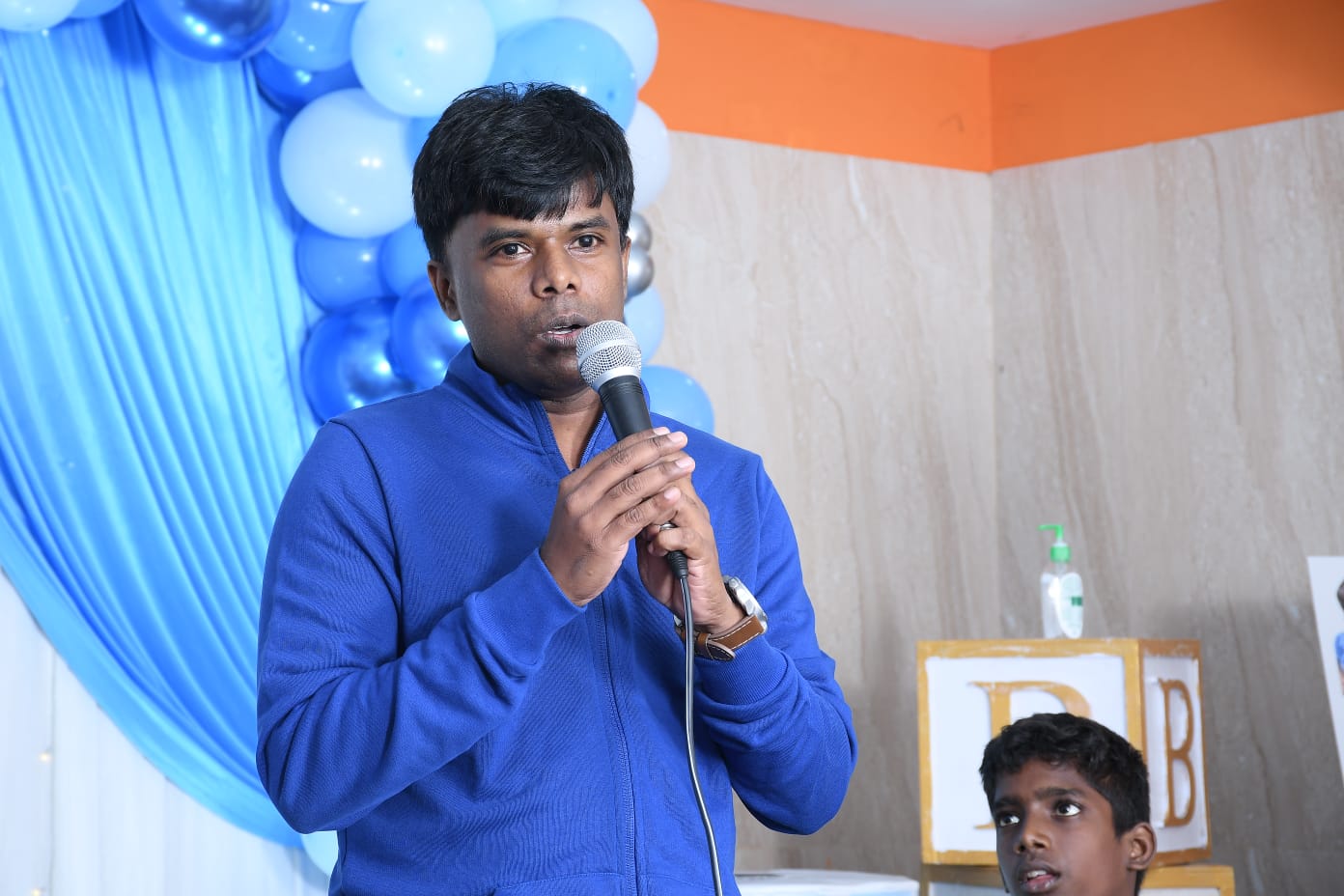
Tamilselvan T
Founder, Tacticalism
Tamilselvan runs Tacticalism, a B2B outbound agency for early-stage SaaS and IT Services companies. He shifted a client from generic sequences to ABM and closed their first deal in 12 weeks after six weeks of zero pipeline. Reach him at tamil@tacticalism.com